
For the second part of this mini series about the upcoming Sensory Enigma album, I thought I’d delve into my song writing process.
So, one thing I want to point out is that no matter how wonderful our plans are in life they don’t always quite work out as intended. I had hoped to have all 13 tracks for the new album demoed, if not ready for mixing by the end of January. That was a very overly ambitious idea on my part… I’ve shifted my deadline to the end of February which will hopefully be achievable.
Song Writing – The Process
I’m going to preface this by stating that 1. this is just how I generally write songs but it does vary, and 2. this method will not necessarily work for everyone. Every musician/ songwriter has their own style and process that can take time to figure out.
Sometimes creative inspiration for lyrics comes first, sometimes I need to write music in order for lyrical ideas to come. If a moment of creativity suddenly strikes I usually dive for the nearest piece of paper or, failing that, the notes section on my phone. I also highly recommend sleeping with a notebook and pen by your bed. Yes, I have woken up in the middle of the night to write down an idea in case it’s long forgotten by morning.
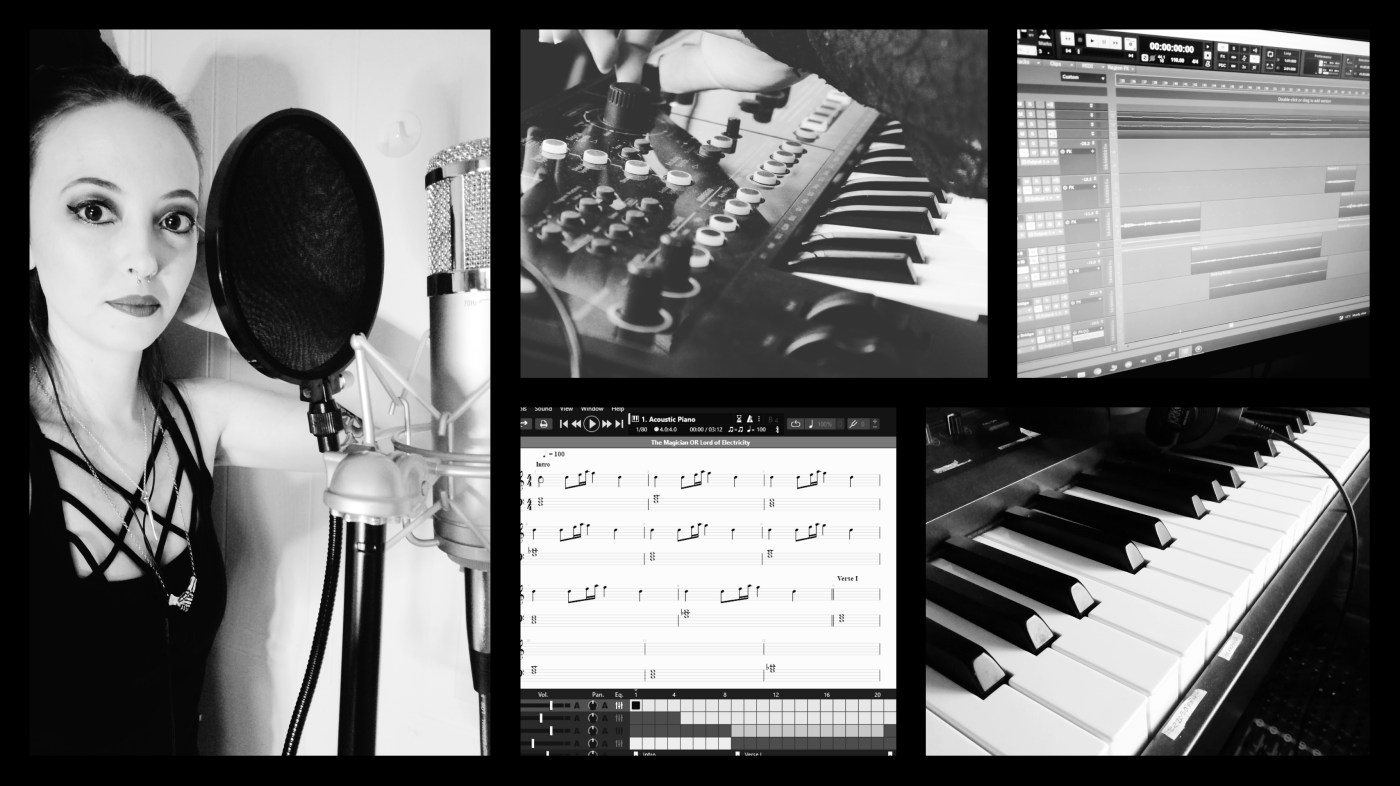
For writing music, I start by sitting at my keyboard and search for a combination of notes or chords that stand out to me. This does depend on my mood, some days I’ll be drawn to dark, minor, or atonal sounds and other days I’m looking for something that could become an epic EDM style motif (yes, there are some EDM aspects on the new album… don’t judge me until you hear it!). Anyhow once I have, for example, a lead motif of three or four notes and the chord progressions that complement them to form the structure for verses, choruses and a bridge (basic song structure), I move from the keyboard to my laptop.
My music writing software of choice for this second step, is Guitar Pro – this isn’t sponsored or anything and other composition software is available. I like it because of the range of instruments from orchestral to electronic and guitars etc. The playback quality of the instruments is not the best in the world but being able to hear everything across a rough representation of the tones and textures I want to use is incredible helpful. I usually get started for Sensory Enigma by mapping out the chord progressions on a keyboard, a synth or perhaps a violin. I then layer up other instruments, add a basic drum part and work on the length of each section. If I have lyrics by this point, which I usually do, I’ll work out how long the verse needs to be to accommodate the vocals.
Once the basic structure of the song is complete, it’s time to export the midi! This is where I transfer the instrument parts into my production software Cakewalk. Now this is set up, the written parts can have the shiny, high quality virtual instruments added onto them. This means higher quality violin sounds, the perfect drum kit, any and every type of synth you can think of and then I can record the vocals on top. Any improvements for example, if the sections don’t segue into each other as smoothly as they should, or if extra parts are needed, more vocals needed, these can all then be sorted. Once happy the tracks are ready for mixing and mastering.
And there you have it, my basic song writing process for the upcoming Sensory Enigma album. I’m very theory focused which is part of the reason I enjoy using Guitar Pro as it’s very visual, I personally struggle going straight from a keyboard to writing midi in Cakewalk directly for example. Like I said, everyone has their own methods.
Now, I’d better get back to finishing some more tracks…
If you’re interesting in following Sensory Enigma you can find all our links here: https://linktr.ee/sensoryenigma
 Holly Royle
Thank you for sharing! <3
LikeLiked by 1 person
❤❤
LikeLike